
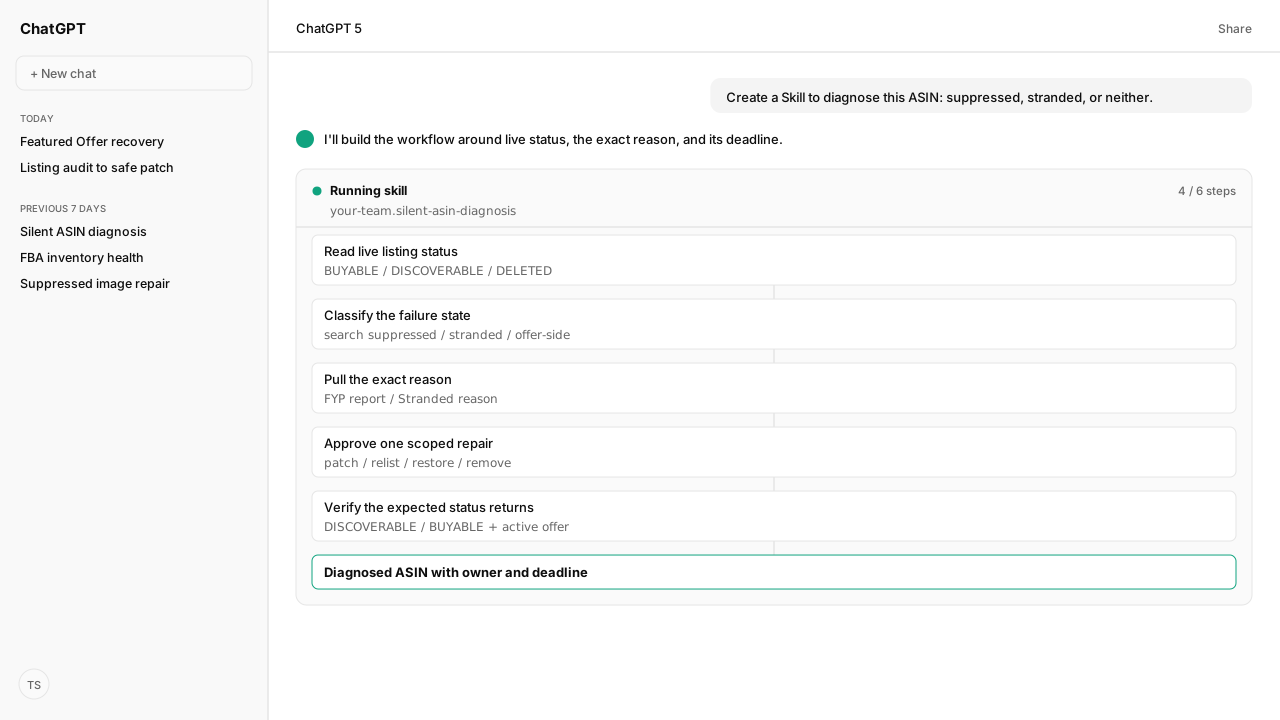
- Read
BUYABLEandDISCOVERABLEbefore editing a silent ASIN. A buyable but undiscoverable offer is search suppressed. - FBA units without an active offer are stranded inventory. Read
Stranded reason, then relist or order removal within 30 days of Amazon's notice. - Pull the exact image, attribute, compliance, offer, or inventory reason; apply one scoped repair; and verify the expected status returns.
Diagnose a silent ASIN with a reusable Skill called silent-asin-diagnosis. It reads live BUYABLE and DISCOVERABLE status through the Selling Partner MCP, uses Amazon Agent Atlas to interpret the exact suppression or stranded-inventory rule, and returns the reason-specific fix plus its deadline before anyone edits the listing.
I start there when a top ASIN suddenly has no orders or impressions. Search suppression, a non-buyable offer, a block, a deletion, and stranded Fulfillment by Amazon (FBA) stock can look identical from the sales graph, but each demands a different repair.
ChatGPT, Claude, Perplexity, Microsoft Copilot, and whatever comes next know nothing about your business out of the box. Your competitors use those tools too. Kuudo gives those same tools your edge: your data, your rules, and the way your business operates. That means your account as it is right now, your judgment running every time, and your call before anything changes. The Selling Partner MCP reads the current listing, offer, and inventory state, Skills preserve your diagnostic order, Amazon Agent Atlas supplies Amazon-specific guidance, and approval controls keep the repair with you.
| Live state | Diagnosis | Next evidence |
|---|---|---|
BUYABLE + DISCOVERABLE | Listing is live | Diagnose traffic and demand |
BUYABLE, not DISCOVERABLE | Search suppressed | Pull reason and issues |
Not BUYABLE; FBA units | Possible stranded stock | Confirm no active offer |
Not BUYABLE; no stranded units | Offer-side failure | Check quantity, window, restrictions |
BUYABLE and DISCOVERABLE separate suppression from stranding
When a listing is search suppressed, Amazon removes discoverability but can leave the offer buyable; stranded inventory is FBA stock in a fulfillment center that does not have an active offer. That distinction is the first branch, not a semantic detail.
The Skill reads ListingsItemStatus, whose relevant values are BUYABLE, DISCOVERABLE, and DELETED. BUYABLE without DISCOVERABLE points to search suppression. An absent BUYABLE status establishes that the offer is not buyable, but it does not establish stranding until the agent also finds FBA units and no active offer. If both status flags are healthy, I move the investigation away from catalog repair.
The suppression reason chooses the repair
GET_MERCHANTS_LISTINGS_FYP_REPORT contains only suppressed listings, the reason for each suppression, and instructions for removing it. It can be requested for a current investigation or scheduled for continuous monitoring.
I use the report to identify the affected SKU, then add its live listing issues to the evidence. The Suppressed Listings Management playbook routes the result through Fix Your Products: image failures go to image requirements, missing attributes expose the absent value, and newly required compliance attributes get patched directly. Rewriting unrelated copy or adding stock does not repair those causes.
The bulk report is not real-time proof. Later report calls can be 1 to 6 hours old, and the stock-data freshness commitment is three hours, so the Skill pairs that evidence with the live listing read before proposing a patch.
The stranded reason chooses relist, restore, or removal
Stranded reason determines whether the operator should relist the SKU, restore an offer, correct price or condition, fix the fulfillment channel, or remove the units. The Fix stranded inventory page is the most accurate source when Manage Inventory and stranded status disagree. Until the active offer returns, those FBA units cannot sell and continue to accumulate storage fees.
The Resolve stranded inventory issues playbook reads Stranded reason and the accompanying Additional information or Recommendations. Common evidence includes a missing listing, a missing price or condition, or a merchant-fulfilled listing attached to FBA units. For a catalog-wide repair, the same playbook uses the Bulk Fix Stranded Inventory workflow.
The clock matters. If the seller does not create a listing or order removal within 30 days of Amazon's notice, Amazon designates the inventory unsellable and it must be removed. The deadline begins with Amazon's notice, not with the day I diagnose it.
A repair is complete only when status returns
A submitted change is not a completed repair. Suppression closes when discoverability returns; stranded stock closes when buyability and an active offer return.
The Skill watches LISTINGS_ITEM_STATUS_CHANGE, schedules GET_MERCHANTS_LISTINGS_FYP_REPORT, and re-reads the affected SKU after Amazon's processing window. It records the branch, approved action, evidence, and stranded deadline in the run log. If BUYABLE and DISCOVERABLE are both healthy but demand is still absent, the workflow hands the ASIN to the Amazon Ads MCP instead of misclassifying a traffic problem as a listing problem.
What happens next: route the completed diagnosis to one owner
I route the completed diagnosis to one owner. Product-data issues go to the team approving an image, attribute, or compliance patch. Offer and FBA issues go to the inventory team with the reason-specific action packet. A healthy listing with no demand moves to the advertising team with its catalog state already cleared.
That handoff can run as one recurring Skill through Amazon Agent Flow, so each new silent-ASIN alert arrives with its evidence and owner instead of becoming another unclassified ticket.
The pattern is status, reason, scoped action, and verified return. That keeps a silent ASIN from turning into an expensive guess.
Next, use the listing audit-to-patch guide to turn a verified attribute issue into the smallest safe catalog change.
Diagnose the listing before your team edits it
Bring us the listing-diagnosis workflow you want your agent to run. We'll map the Selling Partner MCP, reusable Skills, Atlas grounding, and private-beta setup with you.
Run this workflow in betaWhat you need to run listing suppression diagnosis
- MCP
- Amazon Selling Partner MCP for live listing status, issues, FBA inventory, reports, and approved recovery actions
- Skill
- silent-asin-diagnosis, a customer-created reusable Skill for status, reason, scoped action, and verification
- Atlas collection
- amazon_sellers, grounded in Suppressed Listings Management, Resolve stranded inventory issues, Stranded Inventory Report, and listing-status references
- requiredAccess
- Seller listing and report access; FBA inventory access for the stranded branch
- Last verified
- 2026-07-30
What success and failure look like for listing suppression diagnosis
| result | interpretation |
|---|---|
| `BUYABLE` present; `DISCOVERABLE` absent | Search suppressed. Pull the suppressed-listing reason and current SKU issues. |
| `BUYABLE` absent; FBA units present; no active offer | Stranded inventory. Read `Stranded reason` and preserve the 30-day notice deadline. |
| `BUYABLE` and `DISCOVERABLE` present | The listing is live. Route the investigation to traffic, demand, or advertising evidence. |
| Report says fixed but live status is unchanged | Treat the report as a lagging bulk snapshot and keep the case open until the expected live status returns. |
Keep exploring listing suppression diagnosis
Use these companion guides to understand the inputs, follow-on analysis, and adjacent workflows behind this playbook.
FAQ
What is the difference between a suppressed listing and stranded inventory?
A search-suppressed listing is not discoverable but can remain buyable. Stranded inventory is FBA stock in a fulfillment center without an active offer, so it cannot sell.
Can a suppressed Amazon listing still be buyable?
Yes. `BUYABLE` can be present while `DISCOVERABLE` is absent. That combination means customers cannot find the offer in search even though the offer can still be purchased.
Which status fields diagnose a silent Amazon ASIN?
Start with `BUYABLE`, `DISCOVERABLE`, and `DELETED`. If `BUYABLE` is absent, check FBA units and active-offer state before calling the inventory stranded.
Which report shows why an Amazon listing is suppressed?
`GET_MERCHANTS_LISTINGS_FYP_REPORT` contains suppressed listings, each suppression reason, and removal instructions. The report can be requested or scheduled, but it is not near real time.
Where do I find the reason my FBA inventory is stranded?
Use the `Stranded reason` column on Fix stranded inventory. Its additional information and recommendations identify whether to relist, restore an offer, correct listing data, change fulfillment, or remove units.
How long do I have to fix stranded Amazon inventory?
Create a listing or order removal within 30 days of Amazon's notice. After that window, Amazon designates the stranded inventory unsellable and requires removal.
Why does my suppressed-listings report still show an issue after I fixed it?
Inventory reports can lag the live listing state by hours. Re-read the SKU's live status and issues; keep the case open until `DISCOVERABLE` or the expected active-offer state returns.