
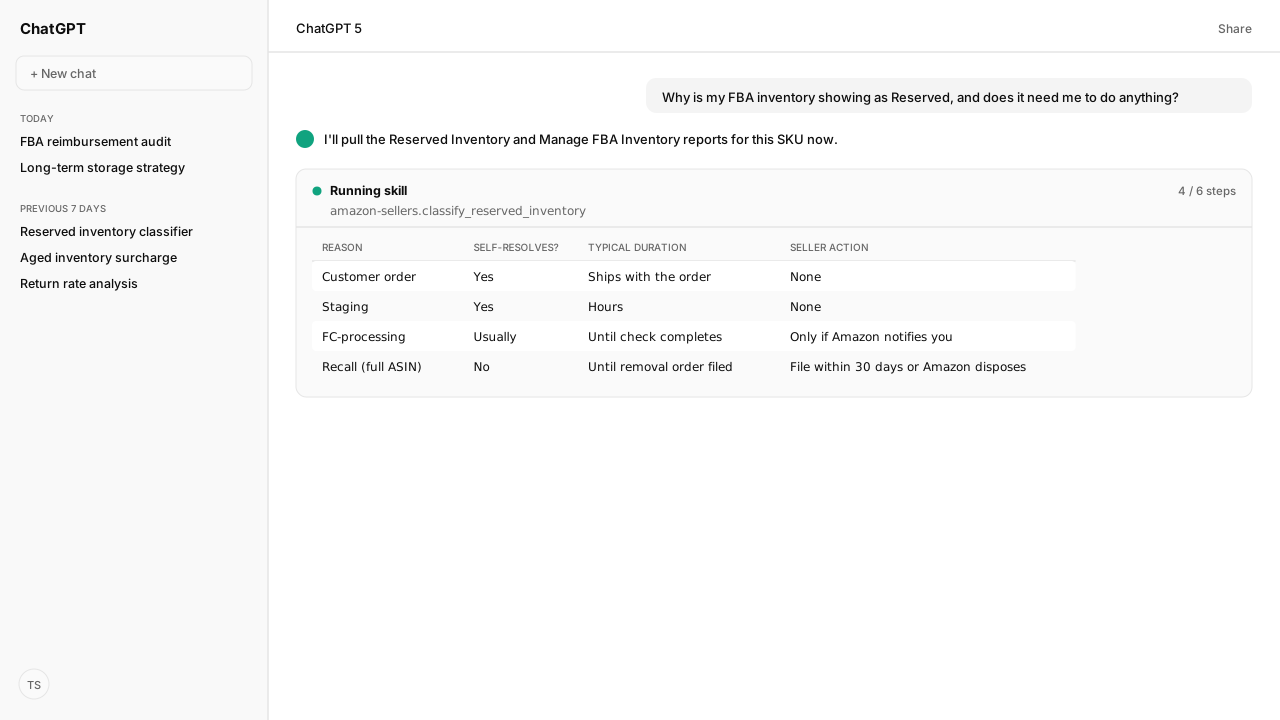
- Reserved has exactly three causes: a customer order in progress, staging for fulfillment speed, or FC-processing (verification, investigation, or a pending removal). The first two clear with no action from you.
- Reserved is a different number from FC-transfer (units moving between fulfillment centers) and reserved-future-supply (units already sold via In-Stock Head Start while inbound stock is still arriving).
- Reserved is excluded from On-Hand and Unsellable: On-Hand + Unsellable + Reserved + Inbound is your total unit count for the SKU.
- A full-catalog reserve on one ASIN is the signature of a recall, not routine reserved status. File a removal order within 30 days of the notice, or Amazon disposes the units.
"Reserved" on an Amazon FBA (Fulfillment by Amazon) inventory report means Amazon set the unit aside for one of exactly three reasons, and none of your other inventory buckets count it while it's there. I asked our agent why a Reserved spike had shown up on a bestselling ASIN the week before a promotion, and it read the Reserved Inventory report and the Manage FBA Inventory report through the Selling Partner MCP, grounded by Amazon Agent Atlas, and matched every unit to a reason: a customer order mid-shipment, staging for fulfillment speed, or FC-processing. The Slack message that started it was blunt: "why is 400 units of our best SKU suddenly Reserved, are we about to run out before the promo?" Two of the three reasons needed nothing from us. The third sometimes does, and Amazon says so directly when it does.
A generic support article says reserved status "usually resolves itself," which is true for two of the three reasons and dangerously incomplete for the third: a full-ASIN reserve is what a recall looks like on this report, and the removal-order clock (30 days) starts on the notice, not on whenever someone notices the numbers moved. The Selling Partner MCP reads which reason code actually applies to this SKU right now, not the general definition, and Atlas supplies the resolution path Amazon documents for that specific reason, so the agent tells the operator whether to wait or file a removal order today instead of repeating the same reassurance to every Reserved spike.
Reserved has exactly three reasons, and two need nothing from you
Amazon's own Reserved Inventory report names exactly three reasons a unit sits in reserved status: a customer order in the process of being fulfilled, staging (Amazon temporarily holding units to optimize fulfillment speed), or FC-processing (verification of item dimensions and weight, a pending investigation, or a pending removal order). Only the third can require anything from you, and Amazon notifies you when it does.
The agent pulls the per-SKU count from afn-reserved-quantity on the Manage FBA Inventory report and classifies it against those three reasons rather than reporting a bare number:
{
  "asin": "B0EXAMPLE99",
  "sku": "TOTE-CANVAS-14",
  "afn_reserved_quantity": 42,
  "reason": "fc_processing",
  "requires_seller_action": false,
  "note": "Set aside for dimension/weight verification; Amazon notifies you if action is needed."
}Reserved isn't FC-transfer, and it isn't reserved-future-supply
Two other Manage FBA Inventory columns sit right next to afn-reserved-quantity and get confused with it constantly, because all three sound like "inventory being held back." afn-fc-transfer-quantity is units moving between fulfillment centers; customers can still buy them, they just see a future ship date, and the move typically takes 1 to 25 days, longer if weather delays it. afn-reserved-future-supply is units customers already bought through In-Stock Head Start while your inbound shipment is still on its way to a fulfillment center.
The distinction that actually matters for a seller: afn-fc-transfer-quantity units are still buyable. afn-reserved-quantity units are not. The agent reads all three columns from the same Manage FBA Inventory report through the Selling Partner MCP, and Atlas is what keeps them from collapsing into the single "held back" bucket their names invite. Mistaking one column for another is how a seller ops lead over- or under-reacts to a number that was never a problem, or misses one that was.
Reserved is excluded from On-Hand: the formula that reconciles it
The Reserved Inventory report states this directly, and it's the line most sellers reconciling a spreadsheet miss: reserved quantity is not included in On-Hand or Unsellable quantities. Your total units at a fulfillment center for a SKU equal On-Hand + Unsellable + Reserved + Inbound, and On-Hand itself further breaks down to Available + FC-transfer. A seller counting On-Hand and expecting it to match their total shipped-to-Amazon quantity will always come up short by exactly the Reserved and Inbound amounts, and read that gap as missing inventory.
The Selling Partner MCP pulls all four terms of that formula from the same live account the report describes, and the agent checks the identity on every run, so a real discrepancy the formula itself can't explain gets flagged as an actual problem instead of getting buried under a reconciliation error that was never a bug.
When Reserved is actually a recall, and the 30-day clock that follows
A full-ASIN reserve, meaning every unit of one product and not a partial count, is Amazon's recall signature, not routine reserved status. When an ASIN gets recalled, all its units are reserved and can't be moved. You have 30 days from the recall notice to file a removal order; miss the window and Amazon disposes of the units. Once a removal order is filed, the reserved units show up as In Process Qty on the Removal Order Detail report with a status of Pending, which is the confirmation the filing actually went through. This is the one Reserved pattern that genuinely needs same-day attention, and it looks identical to an ordinary FC-processing hold if you only glance at the column total.
Reserved is also not the only status that looks like this. A separate "Researching" status covers lost or damaged units under investigation, capped at 60 days, after which Amazon either returns them to sellable or starts the reimbursement process. If that's the pattern on your account, the claim windows and valuation rules are in Auditing FBA Reimbursements: What Amazon Owes You.
What happens next
Once the agent classifies a Reserved spike, only the cases that need you reach your queue: an FC-processing hold Amazon flagged, or a full-ASIN reserve that matches the recall pattern. The other two reasons close themselves out and get logged, not escalated. We scheduled the same check as a recurring Skill through the Amazon Agent Data layer, the same data layer that also carries Amazon Ads MCP campaign data, so a recall-driven stockout shows up next to the ad spend that's about to bid on an ASIN that's going unsellable.
The three-reason split is simple once you have it in front of you. What isn't simple is remembering it exists the one time in twelve months the number is actually a recall.
Next: what a Researching investigation costs you if it never comes back, and how to prove Amazon owes you for it, in Auditing FBA Reimbursements.
Stop guessing which Reserved units need you
Bring us your FBA inventory workflow. In a private-beta session we'll map the Selling Partner MCP read, the Atlas-grounded reason classifier, and the recurring Skill that flags a real recall before the removal window closes.
Run this workflow in betaWhat you need to run this
- MCP
- Amazon Selling Partner MCP for live reads of the Reserved Inventory report and the Manage FBA Inventory report
- Skill
- reserved-inventory-classifier, a recurring check that matches afn-reserved-quantity to its reason and flags anything needing a removal order
- Atlas collection
- amazon_sellers, the rule corpus with the three reserved-status reasons and their resolution paths (playbooks: Reserved Inventory report; Manage FBA Inventory report; FBA Inventory overview; Remove inventory overview)
What success and failure look like
| condition | interpretation |
|---|---|
| afn_reserved_quantity > 0, reason: customer_order or staging | Self-resolving. No seller action; the units clear when the order ships or the staging step finishes. |
| afn_reserved_quantity > 0, reason: fc_processing, Amazon notification present | Seller action required. Follow the specific instruction Amazon sent; FC-processing is the one reason that isn't automatically safe to ignore. |
| afn_reserved_quantity equals 100% of an ASIN's total units, no notification | Possible recall pattern, not a confirmed one. A whole-ASIN reserve can also be an unusually complete FC-processing hold on a low-quantity SKU. Confirm an actual recall notice or reason code before filing anything; only then does the 30-day removal-order clock apply. |
| Units in a separate 'Researching' status past 60 days | The investigation should have resolved by now. Check the Inventory Defect and Reimbursement portal for a reimbursement decision. |
Keep exploring this topic
Use these companion guides to understand the inputs, follow-on analysis, and adjacent workflows behind this playbook.
What happens when a Researching investigation doesn't return your units to sellable: the claim windows and valuation rules once that happens.
FAQ
Why does my Amazon FBA inventory show as 'Reserved'?
One of three reasons: a customer order in the process of shipping, staging (Amazon briefly holding units for fulfillment speed), or FC-processing (dimension/weight verification, an investigation, or a pending removal order). The first two clear on their own.
How long does reserved inventory stay reserved?
Customer-order and staging reserves have no fixed window; they clear when the order ships or the staging step finishes. FC-processing reserves clear once Amazon completes the check, and Amazon notifies you if action is required.
What's the difference between afn-reserved-quantity, afn-fc-transfer-quantity, and afn-reserved-future-supply?
afn-reserved-quantity is the Reserved count above. afn-fc-transfer-quantity is units moving between fulfillment centers (1-25 days, longer if weather-delayed) and is still buyable, just showing a future ship date. afn-reserved-future-supply is units customers already bought through In-Stock Head Start while your inbound shipment is still arriving.
Does reserved inventory count toward my On-Hand quantity?
No. On-Hand equals Available plus FC-transfer only. The full reconciliation is On-Hand + Unsellable + Reserved + Inbound, per the Reserved Inventory report's own note.
My whole catalog for one ASIN just went to Reserved overnight. Why?
That's the signature of a recall, not routine reserved status. Amazon reserves every unit of a recalled ASIN and blocks it from moving. File a removal order within 30 days of the recall notice, or Amazon disposes of the units.
If reserved inventory never comes back, is it a reimbursement case?
Only if it moved into a separate 'Researching' status first (a lost/damaged investigation, capped at 60 days) and wasn't returned to sellable. That's a different report and a different process; see the FBA reimbursement audit for the claim windows and valuation rules.
Where do I see reserved units broken out by reason?
The Reserved Inventory report gives the reason-level breakdown. The Manage FBA Inventory report's afn-reserved-quantity column gives the per-SKU total without the reason split.