
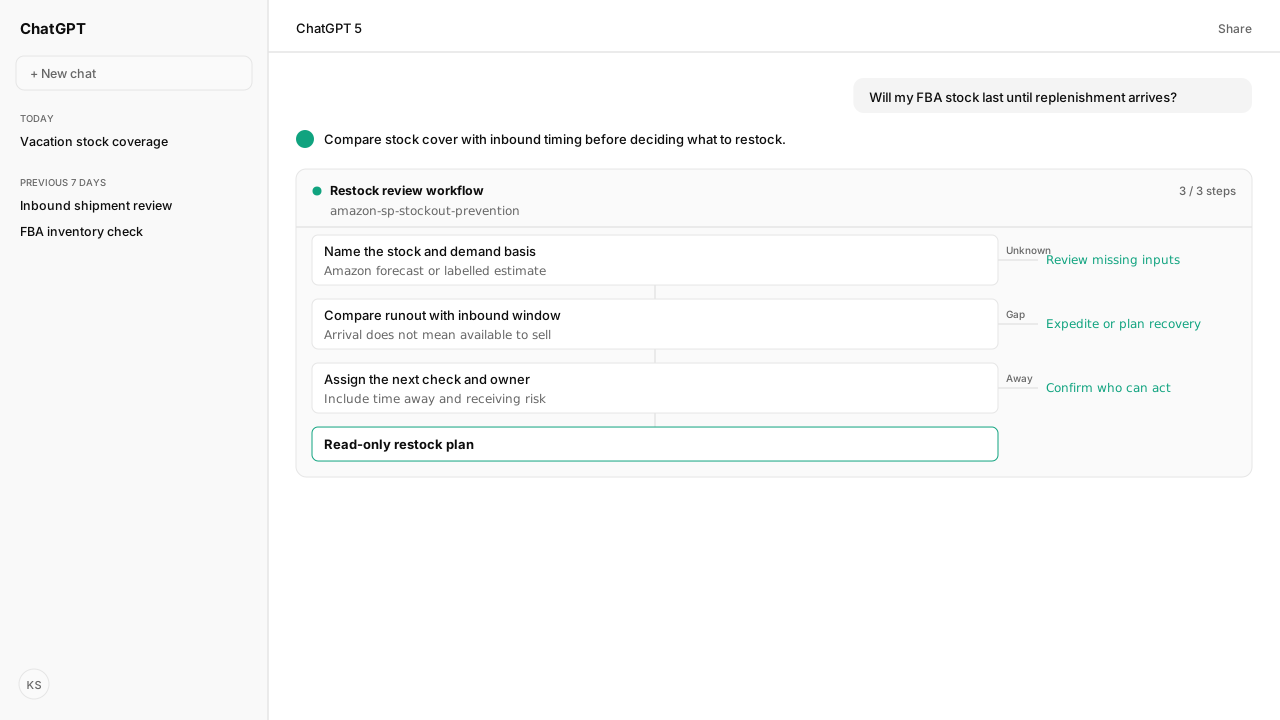
- Compare estimated runout with dated inbound stock and receiving uncertainty. Inbound totals alone do not show whether stock bridges the arrival gap.
- Prefer Amazon’s forecast-based on-hand days of supply. Label the fallback as fulfillable units divided by average FBA sales over 30 complete days.
- Before vacation, plan through the next realistic replenishment availability, accounting for who can act while you are away. FBA listings remain active under vacation settings.
- The Stockout Prevention Skill reads account evidence and recommends the next action. Recurring monitoring and shipment changes require separate setup or workflows.
An Amazon FBA restock decision depends on whether usable stock lasts until replenishment becomes available. Prefer Amazon’s forecast-based on-hand days of supply; label any trailing-sales estimate. Kuudo’s Stockout Prevention Skill matches that coverage to dated inbound shipments so you can identify the arrival gap and decide what needs attention first.
“We have units on the way” leaves the important question unanswered: can tomorrow’s orders ship? Your fulfillable stock, recent FBA demand and shipment dates change the answer. The Stockout Prevention Skill brings those account facts together through the Amazon Selling Partner MCP, producing a ranked list of what to expedite or investigate.
Use this decision worksheet. The row below uses illustrative inputs, not a customer account or an executed report. All dates are in 2026.
| Planning input | Illustrative value |
|---|---|
| SKU | Example A |
| Stock basis | 120 fulfillable, Oct 14 |
| Cover basis | 300 FBA units / 30 days |
| Estimated runout | Oct 26 |
| Inbound | 500 shipped; Oct 30–Nov 2 |
| Arrival gap | At least 4 days before arrival |
| Next action | Check earlier supply; receiving still unknown |
FBA stock states determine which units can cover demand
Fulfillment by Amazon (FBA) inventory totals combine units with different jobs and availability. Amazon’s FBA Inventory overview distinguishes available stock from transfers, customer commitments and inbound stock. Keep those categories separate before calculating coverage.
- Fulfillable units form the stock basis for the Skill’s trailing-sales estimate.
- Customer-order reservations are committed to customers. Don’t count them again as replenishment supply.
- FC-transfer units may remain buyable with a future shipping date. Amazon includes these with Available units in its forecast-based on-hand days of supply.
- Working, shipped and receiving quantities describe different inbound stages. Working units have not shipped; receiving does not establish when every unit becomes fulfillable.
The Skill reads these quantities separately through the Selling Partner MCP. Amazon Agent Atlas supplies the definitions that prevent the agent from treating a total inventory figure as stock ready to fulfill today’s demand.
Amazon’s total days of supply includes inbound inventory. That broader number cannot establish continuous coverage before a shipment arrives. Label each row’s stock basis so Amazon’s on-hand forecast and a fulfillable-only estimate remain distinguishable.
The demand window determines the estimated runout date
Amazon’s forecast-based days of supply and a trailing-sales calculation answer different questions. The Restock Inventory documentation describes forecast and seasonality inputs. A recent-sales average assumes that the selected pace continues.
Prefer Amazon’s planning report when available. The Skill reads its on-hand days of supply, recommended ship-in quantity and recommended ship-in date. Its parser reports missing columns, so a blank recommendation remains missing rather than becoming a guessed order quantity. The FBA Inventory report also identifies sales windows for interpreting recent demand.
Calculate a labelled fallback
When the report cannot be read, the Skill calculates a labelled fallback:
Estimated days of cover = fulfillable units ÷ (FBA units sold over the last 30 complete days ÷ 30).
For the worksheet’s illustrative inputs, 300 units over 30 complete days means 10 units per day. Dividing 120 fulfillable units by 10 gives 12 days of estimated cover. An October 14 snapshot therefore implies a runout around October 26. The estimate excludes merchant-fulfilled sales and uses the marketplace’s time zone.
Check changes in demand and zero-sales cases
For flagged SKUs, the Skill also checks the last seven days. When that pace differs by more than about 25%, it shows both estimates. That threshold is a Skill heuristic, not an Amazon rule. Tell the agent about upcoming promotions or seasonal changes; a trailing average does not incorporate those plans automatically. Review campaign activity separately through Amazon Ads MCP; this inventory Skill does not change campaigns.
Zero recent FBA sales produces “no recent FBA sales,” not unlimited coverage. Check listing activity and Amazon’s recommendation before deciding the SKU is dormant. A product with no available stock and a ship-in recommendation deserves a different conversation from a discontinued listing.
A dated shipment exposes the gap hidden by inbound totals
An inbound quantity is incomplete without a shipment status and arrival window. The Skill checks shipped plans, then active plans, matches the SKU to individual shipments and reads the selected delivery window. A shipment marked ready to ship still depends on leaving on time.
For each relevant shipment, compare the estimated runout date with the start of its arrival window:
Pre-arrival gap = arrival-window start − estimated runout date.
Read the gap as a dated estimate
The worksheet’s October 30 arrival-window start falls four days after the October 26 runout estimate. That is a minimum four-day gap before arrival, assuming the stated demand pace and dates hold. The window extends to November 2, and receiving can add time before units become fulfillable.
Keep receiving time and unknowns visible
An arrival window before the runout date is encouraging, but it does not establish the availability date. Keep receiving uncertainty visible when deciding how much buffer your operation needs.
For several shipments, check whether the earliest quantity covers demand until later stock becomes available. Five hundred units in one shipment and five hundred units spread across different weeks are different replenishment positions. If the Skill cannot match all inbound units or find a delivery window, the result must state that uncertainty.
An unknown date is a reason to investigate, not a date to fill in. A fulfillable-stock gap signals fulfillment risk; transfers and future buyability can mean the listing still accepts orders.
The next restock action depends on where replacement stock sits
A positive arrival gap calls for an earlier supply option or an explicit recovery plan. Start with the units already available to your business: goods at a local warehouse can follow a different route and timeline from a new supplier order.
Amazon’s Restock Inventory settings distinguish direct supplier delivery, replenishment through the seller and bulk stock already held by the seller. Supply the relevant assumptions: supplier time when a new order is needed, preparation, transit and an allowance for receiving. Don’t add production time again for finished goods already in your warehouse.
Use Amazon’s recommended ship-in quantity and date when present, alongside your actual constraints. The recommended ship-in date is not a supplier purchase-order date. Case packs, minimum quantities and realistic lead times still matter to the action your team takes.
Keep the recommendation separate from execution
The Stockout Prevention Skill reads and recommends. Creating or changing an Amazon inbound shipment belongs to the FBA Inbound Skill; that handoff does not create a supplier purchase order. If earlier supply is unavailable, record the expected gap and the recovery action. Review fee exposure separately in the FBA inventory health guide.
Vacation planning needs coverage beyond the day you return
Before going on vacation, set a coverage horizon through the next replenishment that your team can realistically arrange. If nobody can act while you are away, extend the horizon through your return plus replenishment lead time. If a delegate can replenish sooner, use that plan and confirm their authority.
Amazon’s Listing status for vacations, holidays, and other absences says FBA listings remain active when vacation settings make seller-fulfilled listings inactive. Vacation mode does not pause FBA demand. The inventory plan therefore needs to stand on its own.
Give the person covering the account a short handoff:
- Set the planning horizon. Record departure, return and the earliest replenishment availability your team can arrange. Include periods when nobody can approve or act.
- Review coverage before departure. Give the agent that horizon and request every SKU whose cover ends before it, including SKUs outside the Skill’s default risk bands. Compare demand assumptions and verify shipment quantities, statuses and windows. Resolve unknown arrival dates with the responsible shipment owner.
- Assign monitoring and escalation. Name who checks the account, how often, and who acts if a shipment slips or demand accelerates. Agree thresholds, spending authority and a backup contact before leaving.
- Leave an action for each exposed SKU. State the earlier-supply option, who can arrange it, and what to do if it cannot arrive in time. Include a deliberate recovery plan where a gap is accepted.
The shipped Skill performs a check when run; it is not an installed vacation monitoring service. A recurring workflow needs separate setup, a schedule, an owner and a tested notification path. Amazon Agent Flow can sit alongside that workflow for governed access to your stored operational history; its presence alone does not schedule checks or replenish stock.
Run the handoff once with the covering teammate while you are available. Confirm that they can read the result and reach the person authorized to act. The useful vacation outcome is a decision someone can carry out without needing your laptop.
What happens next: review the earliest exposed SKU
Ask your connected AI client: “Run Stockout Prevention for my seller and marketplace. Use Amazon’s planning report or label the fallback. I’ll provide an absence horizon, lead times and who can act. Include every SKU whose cover ends before that horizon, even outside default risk bands. Match inbound shipments. Show stock basis, demand window, runout, arrival gap and unknowns. Keep this read-only.”
Take the first exposed SKU and resolve its largest uncertainty: demand pace, arrival window or time to fulfillable stock. If the stock covers the relevant horizon, record that conclusion too. The workflow should make a healthy position as clear as a shortage.
For Vendor Central stock, use the separate ARA inventory health guide to interpret Amazon’s vendor measures before applying a coverage calculation.
Bring your restock decisions into your AI client
Connect your seller account to the AI your team already uses. Community provides 10,000 API calls per month, free, with MCP access in your cloud. Ask about the Stockout Prevention Skill and any separate workflow requirements when you request access; your AI and cloud provider costs are separate.
Request beta accessWhat you need to run Amazon FBA restock
- MCP
- Amazon Selling Partner MCP for FBA inventory, FBA-only sales, planning reports and inbound shipment reads.
- Skill
- Stockout Prevention, version 0.1.0, pinned to KuudoAI/skills commit c6576d987fac04e851cea30904a94f4066d4f950. Reads and recommendations; shipment changes use a separate workflow.
- Atlas collection
- amazon_sellers: Restock Inventory; FBA Inventory overview; FBA Inventory report. Inventory states and restock definitions grounded in the retrieved corpus.
- Required subscriptions
- Authorized seller account access through the Selling Partner MCP. The report parser requires a host with Python 3.9+ and outbound HTTPS. Without that capability, the Skill uses a labelled estimate and may cover only part of a large catalog.
- Last verified
- 2026-10-14
Keep exploring Amazon FBA restock
Use these companion guides to understand the inputs, follow-on analysis, and adjacent workflows behind this playbook.
FAQ
How do I know when to restock Amazon FBA inventory?
Compare the estimated runout date with the next replenishment availability, including transit and receiving uncertainty. Prefer Amazon’s on-hand days of supply and recommended ship-in date when available. A positive gap before arrival calls for an earlier supply option or a recovery plan.
How do I calculate FBA days of cover?
For a trailing estimate, divide fulfillable units by average daily FBA unit sales over the last 30 complete days. Label the result as an estimate. Amazon’s forecast-based on-hand days of supply uses a different stock basis and forecast inputs, so the two numbers need not agree.
Does inbound inventory prevent an FBA stockout?
Only if the right quantity becomes available in time. Match the SKU to shipment quantities, statuses and dated arrival windows. An arrival window is not a fulfillable-by date, and total days of supply including inbound does not establish uninterrupted availability.
What should I do about FBA inventory before vacation?
Check coverage until the next replenishment your team can arrange becomes available. If nobody can act while you are away, include your absence and the replenishment lead time after return. Verify inbound dates, name a monitoring owner and agree escalation and spending rules. Amazon’s vacation settings leave FBA listings active, so they do not pause FBA demand.
What if the FBA planning report cannot be read?
If a report document URL has expired, request a fresh URL. If the host cannot run Python or reach HTTPS, the Skill uses a labelled trailing-sales estimate and states the coverage limits. Missing report fields remain unknown; they are not replaced with guessed replenishment quantities.
Can Kuudo monitor inventory and restock automatically while I am away?
The shipped Stockout Prevention Skill performs a read-only check when run. Recurring checks need separate scheduling, a monitoring owner and a tested notification path. Shipment changes belong to the FBA Inbound workflow. The Stockout Prevention Skill does not create supplier purchase orders.