
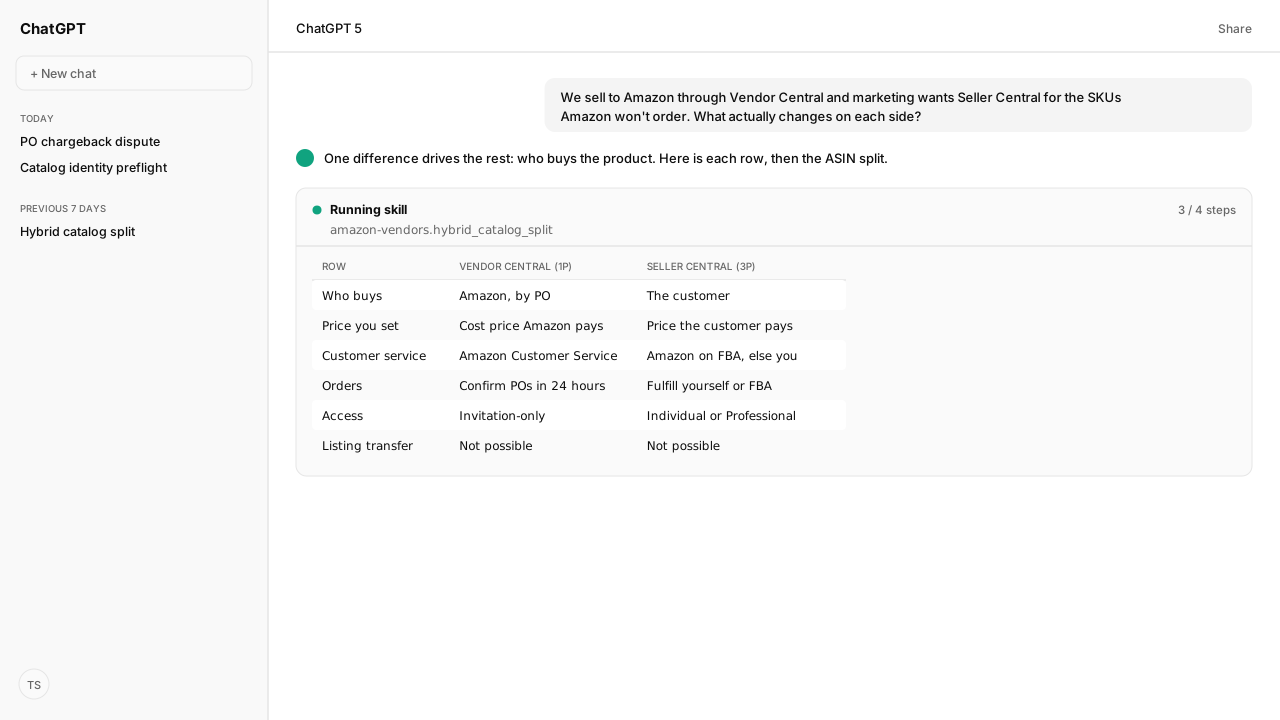
- Vendor Central is first-party (1P): you sell to Amazon by purchase order, propose the cost price Amazon pays you, and Amazon Customer Service answers the buyer.
- Seller Central is third-party (3P): you sell directly to customers, set the price they pay, and fulfill yourself or through Fulfillment by Amazon (FBA). Amazon answers the customer on FBA orders; on orders you ship, you do, unless you opt into Customer Service by Amazon.
- One brand can run both at once, and both offers can sit on the same ASIN. Amazon keeps the accounts separate: a listing cannot be transferred from one to the other, and customer service follows whose offer made the sale and how it was fulfilled.
- Vendor Central is invitation-only and requires a registered trademark, so for most brands the real decision is which ASINs each account carries.
- The Listings APIs serve vendors and sellers alike, which is why one AI client can work both accounts through the Vendor Central MCP and the Selling Partner MCP.
Vendor Central vs Seller Central comes down to who buys the product. In Vendor Central you sell to Amazon by purchase order, at a cost price Amazon approves. In Seller Central you sell directly to customers, at a price you set. One brand can run both, even on the same ASIN, but a listing never transfers between the two accounts.
| Vendor Central (1P) | Seller Central (3P) | |
|---|---|---|
| Who buys | Amazon, by purchase order | The customer |
| Price you control | Cost price Amazon pays you | Price the customer pays |
| Who answers the customer | Amazon Customer Service | Amazon on FBA orders; you on orders you ship |
| How orders arrive | POs confirmed within 24 hours | Customer orders you fulfill |
| Access | Invitation-only, registered trademark | Individual or Professional plan |
| Sales reporting | Amazon Retail Analytics | Business Reports |
The question reached me from our own team: "We sell to Amazon through Vendor Central, and marketing wants Seller Central for the SKUs Amazon won't order. Can we run both on the same catalog, and what actually changes on each side?" The comparison articles answer the first half with a table like the one above. The second half is where brands lose weeks, because the answer is different for every ASIN (Amazon Standard Identification Number) in the catalog.
The table is the same for every brand. The split is not: an ASIN Amazon ordered last week and one it has stopped ordering sit in the same row. The Vendor Central MCP reads which ASINs are on open purchase orders, and the Selling Partner MCP reads which ones the brand holds its own stock and seller listings for, in one AI client. Each ASIN then lands in first-party (1P), third-party (3P) or both on this month's orders, not on a channel policy, with Amazon Agent Atlas holding each account's rules while it sorts.
Vendor Central sells to Amazon and Seller Central sells to customers, and that one difference sets price, orders and service
Vendor Central and Seller Central differ first in who the buyer is. Amazon's Brand Registry glossary puts it in one line each: a seller "has a Seller Central account and sells products directly to customers via the Amazon website," and a vendor "has a Vendor Central account and sells products to Amazon as a third party." Everything else in the comparison follows from that.
Price. A vendor controls the cost price, which Amazon's Update costs page defines as "the price you would like us to pay you for your product." Amazon reviews a cost proposal within seven days, and an approved cost applies only to purchase orders issued on or after its start date. A vendor can also supply a list price, shown to customers as the manufacturer's suggested retail price (MSRP), and it must be a price at which substantial sales of the product are made by retailers. A seller sets the price the customer pays, directly in Manage Inventory or through Automate Pricing within parameters the seller sets.
Orders. A vendor receives purchase orders (POs) and "must confirm or reject all POs using the appropriate acknowledgement code within 24 hours of the order being placed." A low confirmation rate can lead Amazon to order fewer products from you. A seller receives customer orders and fulfills them itself or through Fulfillment by Amazon (FBA).
Service and reporting. On a Vendor Central sale, Amazon Customer Service handles the customer. On a Seller Central sale it depends on fulfillment: Amazon handles customer inquiries, refunds and returns on FBA orders, and the seller answers orders it ships itself, unless it opts into Customer Service by Amazon for post-order contacts. Vendors read sales and inventory in Amazon Retail Analytics; sellers read theirs in Business Reports, with Brand Analytics for brands that have enabled it.
Those rows are also what the agent reads for each account. On the vendor side the Vendor Central MCP returns open POs and their acknowledgement status; on the seller side the Selling Partner MCP returns orders, FBA inventory and listing state. The table above is the static version; the agent fills it in per ASIN.
A brand can run Vendor Central and Seller Central at once, on the same ASIN, but Amazon keeps the two accounts separate
A hybrid brand runs both accounts at the same time, and Amazon allows it in so many words. Its Vendor Central FAQ says "a supplier can maintain both accounts simultaneously, as these are separate services that serve different business models," and that "sellers and vendors can sell identical products on the same ASIN at the same time."
The same answer sets the three rules a hybrid brand operates under:
- No transfers. "Direct listing transfers are not possible, and each requires independent listing creation." A product listed in Vendor Central has to be created again in Seller Central.
- The Featured Offer decides who serves the customer. "The responsibility for customer assistance is determined by Featured Offer ownership at the time of purchase." Amazon's Featured offer page for vendors notes that Amazon, vendors and third-party sellers can offer the same product, and each eligible offer may become the featured one, "based on price, delivery speed, and other factors."
- Brand Registry spans both. A brand Administrator assigns selling roles, Brand Representative or Reseller, to Seller Central accounts and Vendor Central accounts alike, and an account ID starting "amzn1.pa.o" identifies a vendor or seller company across Amazon's marketplaces.
Vendor Central is invitation-only, so for most brands the choice is which ASINs each account carries
Vendor Central is not an account a brand opens on its own. Amazon's FAQ states "Vendor Central is invitation-only," and About Vendor Central adds that it "requires that you have a trademark registered for the products you sell to Amazon." A reseller, or a brand without a registered trademark, is pointed to other ways to sell on Amazon.
That shapes the decision. A vendor already in Vendor Central is not choosing an account; it is choosing, per ASIN, between waiting for Amazon's purchase orders and listing the product itself. Amazon offers one route before a seller offer: if Amazon has not placed a PO and you own the brand, Born to Run lets you request an order by submitting "a quantity you think will sell for 10 weeks," which Amazon reviews and, if approved, buys. The Vendor Central MCP shows which ASINs have no open PO behind them, which is the list a Born to Run request starts from, and Amazon Agent Atlas carries the program's current terms so the agent quotes Amazon rather than a forum post.
On the Seller Central side, the account types are two selling plans. The Individual plan charges $0.99 per item sold; the Professional plan is $39.99 a month, so more than 40 sales a month pays for it. The Professional plan is also what includes the Selling Partner API (SP-API), bulk listings and automated pricing, which matters for the next section.
Managing Vendor Central day to day means confirming POs inside the 24-hour window, proposing costs, and keeping list prices current. Amazon also lets suppliers invite brokers or third-party managers into a Vendor Central account, and those managers "can then manage multiple brands through account page drop-downs."
The Selling Partner API reaches both accounts, so one AI client can run Vendor Central and Seller Central side by side
Both accounts sit on the same API family. Amazon's Listings APIs page says they are "available to all selling partners including vendors and sellers," and vendors authorize applications by vendor group: one application can be authorized for up to 10 vendor groups, each covering every vendor code in it. Sellers delegate access on the Professional plan.
That is what lets a hybrid brand run both accounts from one place. Kuudo connects the Vendor Central MCP and the Selling Partner MCP to the AI client the team already uses. The question that opened this guide becomes one request: which ASINs has Amazon ordered on POs in the last month, and which do we hold FBA stock for with no PO behind them? The agent reads the purchase orders through the Vendor Central MCP and FBA inventory and seller listings through the Selling Partner MCP, then sorts each ASIN into one of three lists: covered by Amazon's orders, candidate for a seller offer, or already on both.
The advertising sits on top of both accounts through the Amazon Ads MCP. Amazon Agent Flow lands the Selling Partner and Ads data in a lake in your own cloud, so questions across months of seller orders and ad spend do not wait on live API calls. The rule for which ASINs stay 1P is ours to write, as a Skill the agent runs the same way every time.
What happens next: split the catalog by ASIN before opening the second account
Start from the catalog, not the account. For each ASIN, the agent answers three questions from live data: is Amazon ordering it on current POs, do we hold our own stock for it, and does another offer already hold the Featured Offer. ASINs Amazon orders stay in Vendor Central. ASINs Amazon has stopped ordering go to a Born to Run request first, then to a seller offer. ASINs that run on both get watched for which offer wins the Featured Offer, because that also decides who answers the customer.
Then connect the second account the Amazon way: assign the selling role in Brand Registry, create the listings in Seller Central (they will not transfer), and keep confirming POs inside 24 hours on the vendor side, because a weak confirmation rate costs orders.
The pattern is one catalog, two relationships with Amazon, and a rule per ASIN instead of a policy per channel.
Next: once the split is live, the vendor side's biggest cost is the chargeback, so Dispute a PO On-Time Accuracy Chargeback covers what to do when one lands.
Run your Vendor Central and Seller Central accounts from one AI client
Bring us the catalog and the accounts it sells through. We'll map the Vendor Central MCP, the Selling Partner MCP, Atlas grounding, and private-beta setup with you. The split stays your call.
Run this workflow in betaWhat you need to run hybrid catalog splits
- MCP
- Amazon Vendor Central MCP for purchase orders, shipments and invoices on the 1P side; Amazon Selling Partner MCP for orders, FBA inventory and listings on the 3P side; Amazon Ads MCP for the campaigns that sit on top of both
- Skill
- A catalog-split Skill you write once: the rule that decides, per ASIN, whether it stays on Amazon's purchase orders, opens as a seller offer, or runs both
- Atlas collection
- amazon_vendors and amazon_sellers, grounded in About Vendor Central, Confirm purchase orders, Update costs, Featured offer (Buy Box), Born to Run Program Policy, Listings APIs, Brand Registry selling roles, Brand Registry glossary, Becoming the Featured Offer, Per-item selling fees, and Monthly subscription fee
- requiredAccess
- A Vendor Central account (invitation-only) and a Seller Central account on the Professional selling plan for API access; the Brand Registry Administrator to assign selling roles to both
- Last verified
- 2026-09-23
What success and failure look like for hybrid catalog splits
| result | interpretation |
|---|---|
| A listing exists in Vendor Central and you want it in Seller Central | Create it again in Seller Central. Amazon states direct listing transfers are not possible between the two services. |
| Amazon has not ordered an ASIN you own the brand for | Check Born to Run under Vendor Initiated Orders, which lets a brand owner request an order sized to 10 weeks of sales, before opening a seller offer. |
| A customer on a hybrid ASIN contacts you about an order Amazon shipped | Customer service follows Featured Offer ownership at the time of purchase. If Amazon's retail offer made the sale, or your seller offer was fulfilled by Amazon (FBA), Amazon Customer Service owns the contact. |
| A proposed cost price is still pending | Amazon reviews cost proposals within seven days, and an approved cost applies only to purchase orders issued on or after its start date. |
Keep exploring hybrid catalog splits
Use these companion guides to understand the inputs, follow-on analysis, and adjacent workflows behind this playbook.
FAQ
What is the difference between Vendor Central and Seller Central?
Vendor Central is where a vendor sells products to Amazon, which issues purchase orders and pays a cost price the vendor proposes. Seller Central is where a seller sells directly to customers, sets the price, and fulfills orders itself or through Fulfillment by Amazon.
Can I use Vendor Central and Seller Central at the same time?
Yes. Amazon says a supplier can maintain both accounts simultaneously and sell identical products on the same ASIN at the same time. The services stay separate: listings cannot be transferred between them, and each needs its own listing creation.
What is Amazon Vendor Central?
Amazon's supplier-facing portal for selling to Amazon as a first-party vendor: creating products, confirming purchase orders, managing inventory with Amazon, and viewing sales reporting, invoices and payments. It is invitation-only and requires a registered trademark for the products you sell to Amazon.
Who sets the price in Vendor Central?
The vendor proposes a cost price, the price Amazon pays for the product, and Amazon approves or rejects it within seven days. The vendor can also supply a list price, shown to customers as the manufacturer's suggested retail price. In Seller Central the seller sets the price the customer pays.
Who handles customer service when both Amazon and I sell the same ASIN?
It follows Featured Offer ownership at the time of purchase. If Amazon's retail offer made the sale, Amazon Customer Service handles it. If your seller offer made the sale, it depends on fulfillment: Amazon handles inquiries, refunds and returns on FBA orders, and you handle orders you ship yourself, unless you opt into Customer Service by Amazon for post-order contacts.
Why does Amazon refuse to transfer a listing from Vendor Central to Seller Central?
Because the two services are kept separate. Amazon states direct listing transfers are not possible between the two services, so each account needs its own listing creation for the same product.
Which software connects Vendor Central and Seller Central data together?
Both accounts are reachable through Amazon's Selling Partner API, and the Listings APIs are available to vendors and sellers alike. Kuudo runs the Vendor Central MCP and the Selling Partner MCP side by side, so one AI client reads purchase orders on the vendor side and orders, inventory and listings on the seller side.